That empty bit of frame is called negative space. It is not a void you forgot to fill. It is the air the photograph breathes. Once you know how to use negative space in photography, you stop stuffing every corner, and the picture starts to feel intentional.
This is the version that shows up on walks, at cafe tables, and in the three seconds before someone turns away.
What negative space actually is
Positive space is the thing you came to photograph: a face, a chair, a coat against the sea. Negative space is everything else that still belongs in the frame. A wall. A stretch of water. Sky with almost nothing in it. Soft floor. A blur of street that does not ask for attention.
The empty part is doing work. It isolates the subject. It gives the gaze somewhere to go. It stops the photograph from feeling like a crowded lift.
You do not need a desert. You need one quiet plane next to the thing you care about. If that plane is full of bins, signs, and a stranger's elbow, you do not have negative space. You have leftover clutter.
How to use negative space in photography while you shoot
The habit is physical. You step back. You shift left. You wait for the background to clear. You are not inventing emptiness in an app later.
Leave the direction they are already going
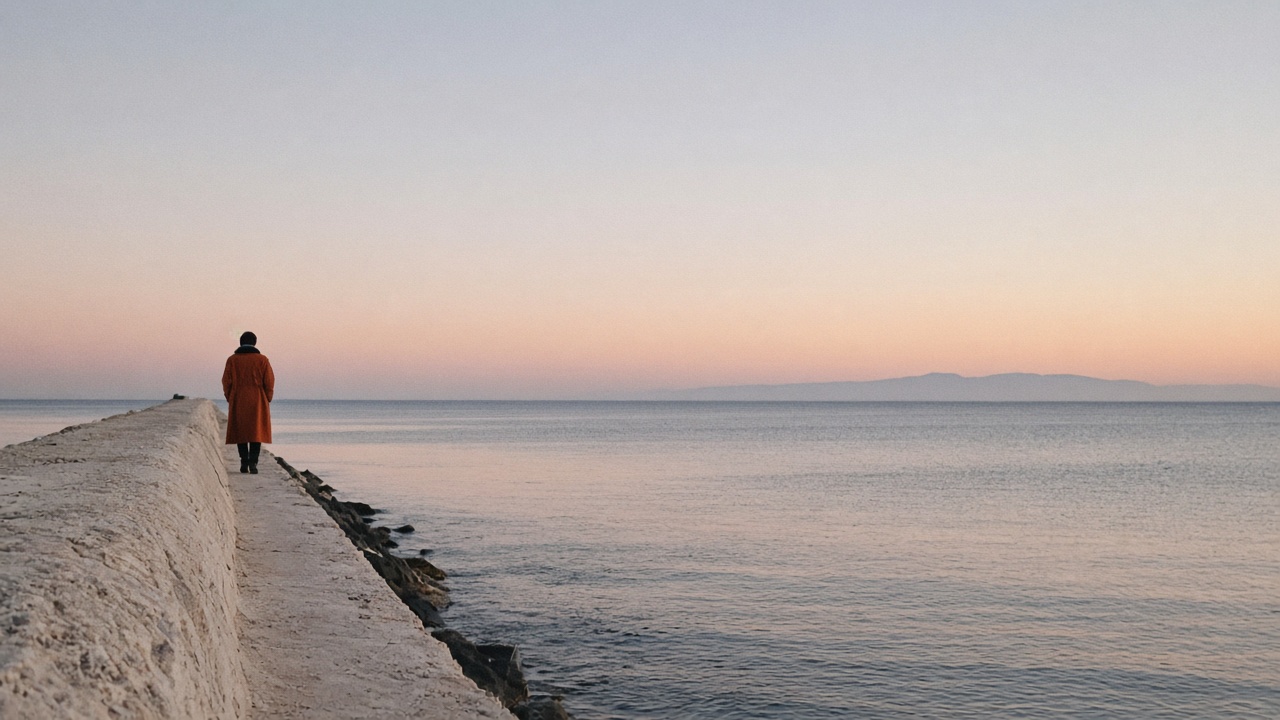
Someone walking along a sea wall. Put them in the middle and the frame feels stuck. Slide them toward one side and leave the open water or path in front of them. That open stretch is the negative space. The photograph has a next moment in it.
This is the same instinct as the rule of thirds, only you are thinking about the empty third as hard as the occupied one. The person is the weight. The space is the sentence that follows.
Portraits that are not passport photos
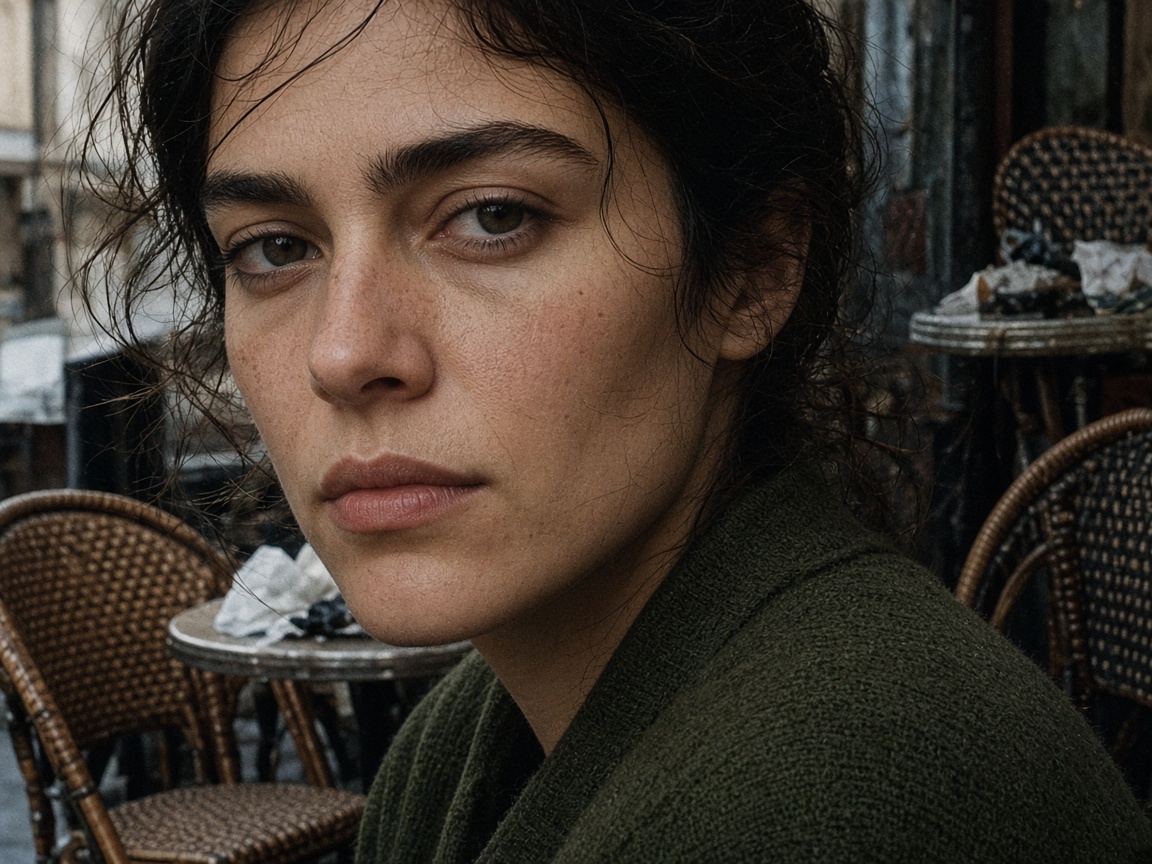
At a cafe, the temptation is to fill the frame with the face. That can work for a close, intimate shot. Often it just feels like you stood too close and hoped crop would save you.
Try the opposite once. Put the person on one side. Let the window, the pale wall, the soft table take the rest. Their eyes still matter. The quiet half of the frame is what makes the eyes feel placed, not trapped.
 Too tight
One object, and then stop
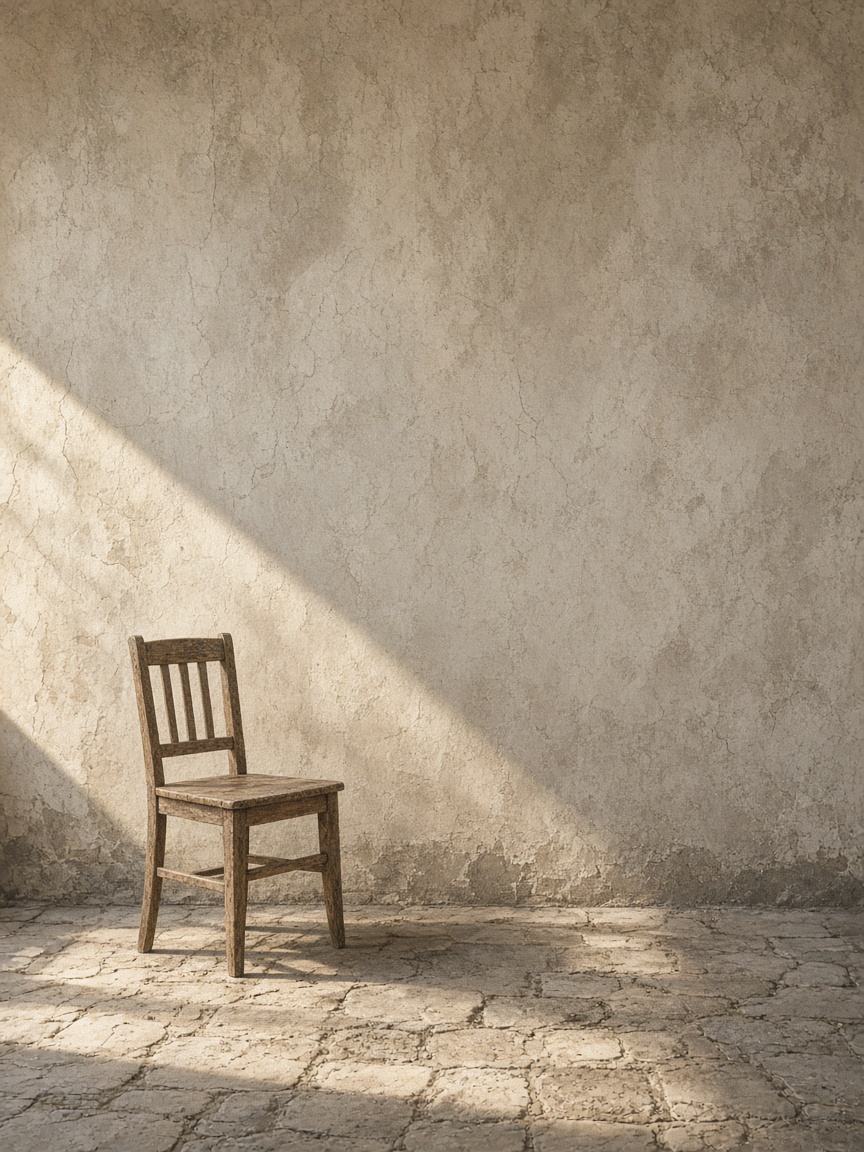
A chair in a courtyard. A cup on a stone ledge. You do not need a second chair for balance. Place the object toward a corner or a lower third, then protect the wall. If a hose, a broom, or a parked scooter enters the open area, step until it leaves, or wait until someone moves it.
Negative space is choosy. It collapses the moment a distraction arrives.
When empty space feels wrong
Not every quiet background helps. If you step so far back that the subject becomes a speck with no expression, you have not composed. You have abandoned the picture. Negative space needs a clear subject, just a smaller one in the rectangle.
Dull emptiness is another trap. A grey car park behind a person is empty, and also boring. Look for a plane with a little character: soft light on plaster, water with a faint texture, a window that holds tone without holding junk.
And watch the edges. A beautiful open sky with a streetlight poking the top corner will still itch. Crop with your feet until the itch is gone.
Color can crowd a frame the same way objects do. A loud orange sign in the “empty” half is not empty. If the open area keeps pulling your eye away from the person, either include that sign as the subject or remove it. Negative space should support the photograph, not compete with it.
Negative space and the rest of the frame
Empty air pairs well with other quiet tools. A clean leading line can run through the open part of the frame and arrive at the subject. The line is the path. The space is the silence around it.
Background distractions are the enemy of both. If the open third is full of posters and a bin, neither the line nor the space can work. Turn a few degrees. Crouch. Wait. The good version of this skill is mostly patience dressed up as composition.
A practice that takes one walk
Pick one subject you already photograph: a friend, a dog, the corner shop. Take two frames every time. First, the close one you would normally take. Second, after you step back or slide aside until there is a clear empty plane beside them.
Say the open part out loud before you shoot the second frame. “Wall.” “Sky.” “Table.” If you cannot name what the empty half is, it is probably still clutter, and you will feel that later.
Do not judge them on the pavement. Look at home. Notice which one you would keep if you had to send only one. Often the tighter shot feels energetic in the moment and cramped later. The one with air survives.
Ten pairs is enough to change how you stand.
Seeing the air before the shutter
The hard part is not the term. It is noticing, while the light is still there, that the subject has no room.
We built Framewiser for that half-second. Open it on your iPhone and it will nudge you the way a photographer beside you would: give them room to breathe, move slightly left, that is the frame. Eventually you feel the tightness before you tap.
Until then, leave a little empty on purpose. The photograph will use it.